NUTRITIOUS FOOD STARTS AT HOME


www.theminicookingclub.org.uk

Friday, 7 June 2013

The Mini Cooking Club Fundraiser: Camberwell Art Festival Bake Sale


The Mini Cooking Club is pleased to announce our latest fundraising event. We are running a charity bake sale in partnership with Camberwell Arts Festival (15th-23rd June). It is a yearly celebration of all things cultural in the area. 


 The Mini Cooking Club stall will be on 15th June, run by Cecilia, Catherine and Jessica.

We are looking for volunteers who want to contribute their baking skills. If you enjoy making cakes, biscuits, flapjacks, meringues, scones or anything delicious we would appreciate the help. Please deliver them from 11am onwards to Camberwell Green, SE5 7AN. Look for The Mini Cooking Club stall.


Join us for the Art Picnic to kick off the festival, involving art, cake and conversation.  Come with friends or get to know other members of the community. Maybe you’ll find a great piece of local artwork to take home.

We will also provide a cake and biscuit decorating service run by Elizabeth Heath, an illustration student at Camberwell School of Arts. You can decorate edible gifts for Father’s Day, keep the kids occupied for half an hour, or indulge your creative side just for fun. The theme of the festival is “travel” so we want to see lots of ships and aeroplanes!

Cutty Sark - by Catherine Heath
All proceeds will go towards running costs for The Mini Cooking Club charity, which provides free educational cooking workshops for people in South London. We hope to see you there, and fingers crossed for good weather!

Please email Catherine to confirm that you will be donating goods, if you want to find out how else you can help or have any questions at all.  

The Mini Cooking Club is registered charity number 1146783. Camberwell Arts Festival is Registered Charity Number 1138225. 

By Catherine Heath

Sunday, 2 June 2013

The Best Start To Life: Healthy Eating Week 2013


The British Nutrition Foundation is launching Healthy Eating Week in order to promote healthy eating habits and exercise in all schools and nurseries. Part of the focus will also be the origins of the food we eat and practical cooking skills. Over 3,000 schools have registered to take part (that’s over one million children and young people). 

Research shows a strong correlation between diet and academic performance. It was shown that children who eat balanced meals are far more likely to do well than children who eat more consume more processed foods and higher levels of fat, sugar and salt. (Aldridge et al, 2008).

The key is not low calorie intake or eating large amounts of fruit and vegetables, but actually to consume enough types of food from each dietary group (fats, dairy, carbohydrate, protein and vitamins and minerals) to fulfil each quota. The focus is on diversity of diet throughout the school day. 

Britain still needs to improve standards of nutrition knowledge and cooking abilities. As processed food and ready meals become ever more widely and cheaply available, children can grow up without managing to learn these essential life skills. 

Academic performance in school influences future educational achievement and therefore adult income levels. It is our responsibility to make sure every child gets the best start possible in life. This may seem obvious, but the amount of money spent on advertising by companies that promote unhealthy food like Nestle and Cadbury is ten times as much as the government spends on healthy eating campaigns.
Parents can try their best to feed their children nutritious food and still lose out to clever marketing campaigns targeted at kids, and too many snacks available in school. Instead of giving children money to spend on chips, try making them a healthy salad or tortilla wrap. If they are hungry in between meals, replace crisps or sweets with fruit or sliced vegetables. Involve children in the preparation of the evening meal to encourage confidence in the kitchen.

Show your support for Healthy Eating Week 2013 by eating your homemade food and tweeting us pictures @EatinCampaign or post on Facebook

Ref:

‘Diet Quality and Academic Performance,’ Aldridge, et al. (2008)


By Catherine Heath

Sunday, 19 May 2013

The Nutrition During Pregnancy Programme: Week One

It’s been a busy week for the Mini Cooking Club since the launch of our brand new Nutrition During Pregnancy Programme, which started on Monday 13th May at East Dulwich Community Centre. I went down there to check it out.

It was off to a bit of a wobbly start when we discovered that the community centre put locks on their equipment cupboards for safety, leaving us with no key. Off I popped to the local Co-op to see if they could help.

The first class was a success! The programme was created and is run by our certified nutritionist, Karen Buckley ANutr. On the menu this week was a delicious and surprisingly simple mango and lettuce salad, homemade chips and homemade burgers, both veggie and meat. Dessert was to be Karen’s signature mouth watering banana and carrot muffins.


One of our attendees
It was off to a bit of a wobbly start when we discovered that the community centre put locks on their equipment cupboards for safety, leaving us with no key. Off I popped to the local Co-op to see if they could help.

We started off baking the muffins first, much to the dismay of the weight watchers group in the next room. Next, we prepared the burger mixtures, chopping and blending to create coriander and butterbean for the veggies, and onion and minced beef patties for the meat eaters. We sliced up large baking potatoes for chips, and baked them in the oven along with the burgers.

We had a break for the nutrition class, during which Karen taught the students about the stages of pregnancy and associated physical changes, weight change, The Eat Well Plate, and the necessary nutrients to stay healthy.

After our work was done, we sat down to eat and get to know one another. Thankfully we had cutlery, as the salad covered in lemon juice would have been impossible to pick up with our hands! Sitting down to eat together at the end is one of the key elements of the programme, because it encourages the attendees to discuss their experiences. According to all involved, the first class was a success! You can view more photos here. We headed for home, tired but happy.

As a brand new programme, Nutrition During Pregnancy holds much promise and is the first of its kind. Our aim is to reach out to people who might not otherwise have taken an interest in the food they eat and teach them useful information at such a crucial stage of their baby’s development. It’s also an important way for mums-to-be to network with one another, and make friends.
 
If you are pregnant and looking to learn about the best nutrition for you and your baby, or know someone who is, please email Karen, or call 07779129371. Places are still available.
Our two nutritionists and an attendee
By Catherine Heath

Saturday, 11 May 2013

St Paul’s Cake Sale, 12 May 2013, Covent Garden


HIV remains one of the most significant public healthy challenges today. At the end of 2011, an estimated 96,000 people were living with HIV in the UK (National Aids Trust, 2011). These include about 73,400 people diagnosed with HIV, and 22,600 who were infected but undiagnosed. Treatment for the condition has significantly improved since the 1950s, with life expectancy increasing from a few years to near normal. And with an early diagnosis, a person’s life can be just as happy and fulfilling as anyone else’s.

There are numerous charities dedicated to helping those with HIV. The Food Chain is an innovative charity seeking to promote nutrition education and cookery skills to those living with the condition in London. They have lots of reliable information for those seeking to understand HIV and offer many practical solutions for people living with the condition. The organisation seeks to provide people with access to the nutrition they need to get well, remain well and lead healthy, independent lives. They also deliver meals and other food to people at home, hold cooking and nutrition classes, and offer communal eating opportunities to people living with HIV and their dependents.

Charities like The Food Chain always need more funds, and this Sunday 12th May, The Mini Cooking Club is teaming up with them to host St Paul’s Cake Sale at Covent Garden, part of the ‘Covent Garden May Fayre and Puppet Festival.’ We will be offering delicious homemade banana bread, cupcakes, carrot cake and bread rolls in exchange for a donation. Our day will start at 10am, in time for the colourful procession at 11am. We hope to see you all there. Find out where we’ll be.
To find out more about The Food Chain initiative or get involved, go to their website.


By Catherine Heath

Monday, 6 May 2013

Help is Here: The Nutrition During Pregnancy Programme

Our nutritionist, Karen, and one of our volunteers
Are you expecting a baby, and concerned about the health of you and your child? The Mini Cooking Club is here to help. 

Pregnancy is both an exciting and stressful time, during which hormones can seem out of control and the body is craving all sorts of food. Diet can seem like a minefield, and reading dozens of lengthy nutrition books can be the last thing you want to do. 

That’s why our nutritionist, Karen Buckley, has designed the Nutrition During Pregnancy Programme. On this free six week course, you will learn about the different stages of pregnancy and associated physical changes. 

Karen will teach expecting mothers about the best eating practices to prepare body and mind for childbirth, and ensure your baby has the best start to life. This opportunity involves learning about the best food provision pre and post-birth, for you and your child. 

You will also learn about weight change, the Eat Well Plate and in-depth information about essential nutrition, danger foods, and religious or meat-free diets. You will learn about the benefits of exercise, what to avoid, post-birth nutrition and breastfeeding. 

The Mini Cooking Club welcomes people into the kitchen for hands-on cooking classes, and attendees have the opportunity to participate fully in the food preparation process under the supervision of our chefs. These classes are designed to be fun, creative and above all informative about food products and different cooking methods.

The classes provide people living in the London community with opportunities to learn nutrition and cooking skills. The Nutrition During Pregnancy Programme is the first of its kind, and completely free. The course is open to all pregnant women, starts Monday 13th May and runs for six weeks at East Dulwich Community Centre. We're excited to see you there!

Places are still available, so book yours now. Email Karen, or call 07779129371.


Our founder, Cecilia (far left)

By Catherine Heath

Sunday, 28 April 2013

Understanding Coeliac Disease


Gluten free snacks
Gluten is a protein composite ingredient found in wheat and other grains. One in every hundred people living in the UK is intolerant to it, and this condition is known as “coeliac disease”. The digestive system is unable to break down any amount of gluten and so consumption causes digestive issues such as nausea, diarrhoea and stomach cramps. Long-term effects of undiagnosed or untreated coeliac disease include infertility and nutrient deficiencies.

The only treatment is a completely gluten-free diet. Although very effective, it can be difficult in practice because the condition is not universally acknowledged. Unfortunately, gluten is found in common foods such as bread, pasta, cereals and cakes. Surprisingly, most brands of oven chips and sausages have added gluten, as do beer, soy sauce, ketchup and ice cream, to name a few. These foods should be avoided, or replaced with gluten-free alternatives.


In overseas markets, a gluten-free diet is catered for almost as readily as vegetarianism. In the UK, coeliac sufferers find it hard to eat out in restaurants and on-the-go, as gluten-free food is not very affordable or widely available. Many people are restricted to eating salads for lunch in the city, since most mainstream brands and companies are unaware of the demand for gluten-free products. Coeliac disease is slowly becoming more widely understood and accounted for in British culture but we are still far behind places like America and Europe. It really should be much simpler for coeliac sufferers to maintain a healthy diet.


There are already a few gluten-free alternatives to bread, pasta, cereal, biscuits and cake available in the UK, produced by brands like Dove’s Farm and Genius. There are also a few other established brands like Mrs Crimbles and Eat Natural whose recognisable logos make shopping a bit easier. Waitrose, Marks and Spencer Asda provide the biggest product ranges that are also labelled as gluten-free. South Londoners can also shop at smaller chains like Whole Market Foods in Clapham, which sells many gluten-free products, and check out Planet Organic in central London.

People with coeliac disease can also obtain gluten-free food on prescription from the NHS, available through your doctor. The foods on offer are generally dietary staples such as bread and pasta, rather than biscuits and cake items, and the list has been agreed by a body called the Advisory Committee on Borderline Substances (ACBS). Make sure you’ve approached your GP about this option if you are a sufferer.  

Widely recognised gluten free symbol
You can find many useful sources of information via the internet written by coeliacs themselves. Blogs like Gluten Free Guerrillas and Gluten Free London offer reviews and lists of coeliac-friendly restaurants, shops and recipes in an accessible format.

Please visit www.coeliac.org.uk for lots of reliable information and advice. If you think you might have undiagnosed coeliac disease, please make an appointment with your GP to confirm or rule it out as soon as possible. 

By Catherine Heath

Sunday, 21 April 2013

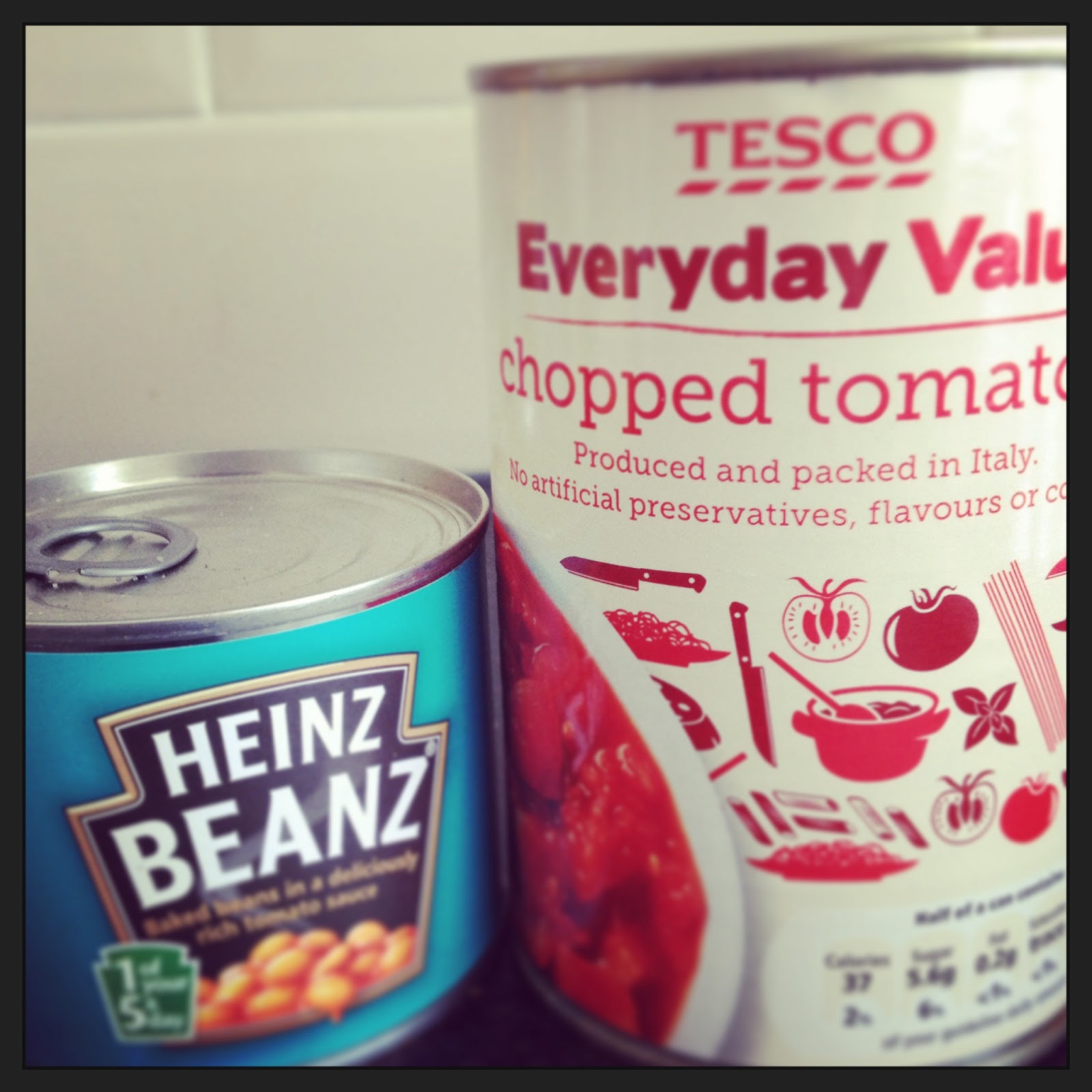
Canned Food Week


Did you know that the method of preserving food in cans was invented in France, in roughly 1810, when the French military were looking a new way to make food last longer? Nicolas Appert suggesting canning and won a cash prize of 12,000 francs. The practice spread across the world, and revolutionised food processing. Demand for cans rose dramatically during World War One, and has remained popular ever since, especially in times of economic recession. This April  marks the first Canned Food Week (April 15-22).

Run by not-for-profit organisation Canned Food UK, it uniquely celebrates any food that comes in a can. Interestingly, statistics show that the canned food market is growing faster than any other grocery sector. People are buying more cans than ever before.

The canning process often captures more of the good stuff than fresh produce on the supermarket shelves. They often contain more essential nutrients and dietary fibre than fresh foods due to the way they are processed for packaging. Tinned food makes life easier as it comes pre-prepared, and makes a tasty addition to many meals. Another of canned food’s many benefits is a long shelf life, which comes in handy if you don’t have time to run to the shops, and saves space in the fridge.  An easy way to get one of your five a day is through canned peaches, pears or cherries (much cheaper than their fresh alternative). Go for a can of value vegetables if otherwise you’d end up buying none at all.

Check out Canned Food UK’s website for recipes to try containing canned goods. Get that can opener ready and remember to recycle the packaging!

By Catherine Heath